
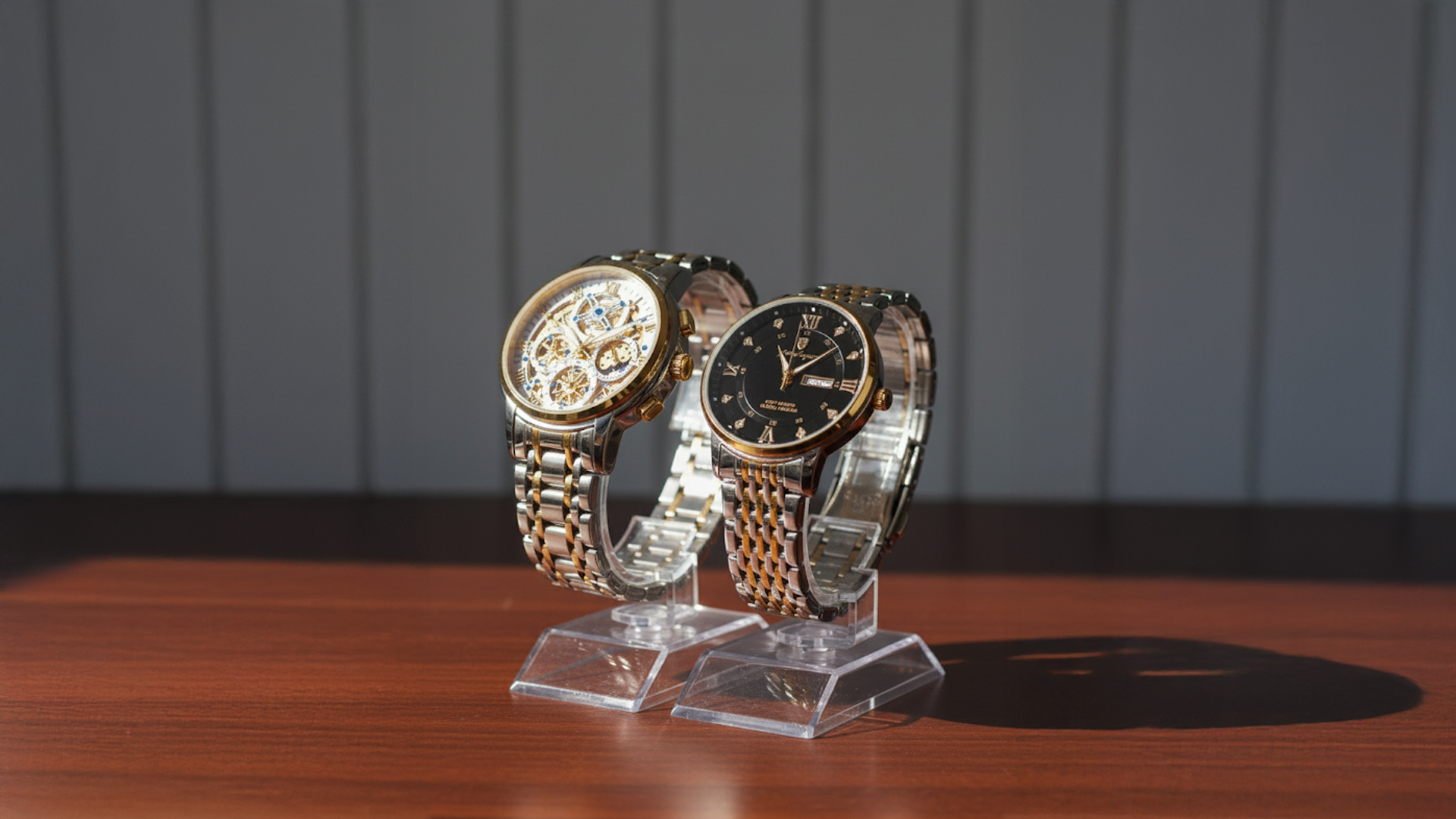
Automatic watches are admired not only for their elegance but also for the intricate mechanics that power them. Unlike quartz watches that rely on batteries, automatic watches use a self-winding movement, storing energy in a mainspring as you wear them. Still, if left untouched for too long, even the best timepieces will eventually stop. That’s when winding becomes essential.
Why Winding an Automatic Watch Matters
In this guide, we’ll take you through each step of winding your automatic watch, while also covering important tips to keep your timepiece in excellent condition.
Why Do Automatic Watches Need Winding?
An automatic watch winds itself through the motion of your wrist. However, when unworn for more than 24–48 hours, the watch may stop because the mainspring runs out of stored energy. Winding your watch manually:
- Keeps time accurate.
- Ensures the lubricants inside the movement stay evenly distributed.
- Reduces unnecessary wear caused by sudden restarts.
- Extends the overall lifespan of the watch.
Many brands, like OBSYSS watches, use similar winding mechanisms, making these steps universally useful.
Step 1: Take Off the Watch
Before winding, always remove the watch from your wrist. Winding while wearing it can put sideways pressure on the crown stem, increasing the risk of damage. Handling the watch in your hands also gives you more control and precision.
Step 2: Locate the Crown
The crown is the small knob on the side of the watch case. Depending on your model, it may be a push-pull crown or a screw-down crown.
- Push-pull crown: Simply pull it into the neutral position.
- Screw-down crown: Rotate it counterclockwise until it unlocks and springs free.
This step ensures the crown is ready to be turned safely.
Step 3: Wind the Watch
With the crown in its neutral position, gently turn it clockwise. Each turn tightens the mainspring, storing energy for the watch.
- How many turns? Around 20–40 turns are usually sufficient.
- How to know when to stop? If you feel increased resistance, the watch is fully wound. Don’t force it further—overwinding can cause internal stress.
Step 4: Adjust the Time and Date (Optional)
If your watch has stopped, you may need to set the time and date. Most crowns have multiple positions:
- First position – date adjustment.
- Second position – time adjustment.
⚠️ Avoid changing the date between 9 PM and 3 AM. During this period, the date-changing mechanism is active, and forcing it could damage the gears.
Step 5: Secure the Crown
Once winding and adjustments are complete, press the crown back into place. If it’s a screw-down crown, twist it clockwise until it’s snug. This step is critical for protecting your watch against dust, dirt, and water damage.
Step 6: Wear Regularly or Use a Watch Winder
The best way to keep your automatic watch wound is to wear it daily. Regular wrist movement ensures continuous energy transfer to the mainspring.
If you own multiple watches and rotate them often, a watch winder can keep unused pieces running smoothly, so they’re always ready to wear.
Extra Care Tips
- Wind your watch at the same time each day for consistency.
- Avoid winding too quickly—steady, gentle turns are best.
- Store your watch in a dry, cool place away from magnetic fields.
- Have your watch serviced by a professional every 3–5 years to maintain its precision.
Final Thoughts on winding automatic watches
Winding your automatic watch is a simple but important practice that maintains accuracy, performance, and longevity. More than just a technical step, it’s a ritual that deepens your connection with the craftsmanship of your timepiece. With proper care, your watch will not only keep perfect time but also last for generations. If you’re interested on some affordable luxury automatic watches, then you may go to one stop shop for reliable watches, OBSYSS